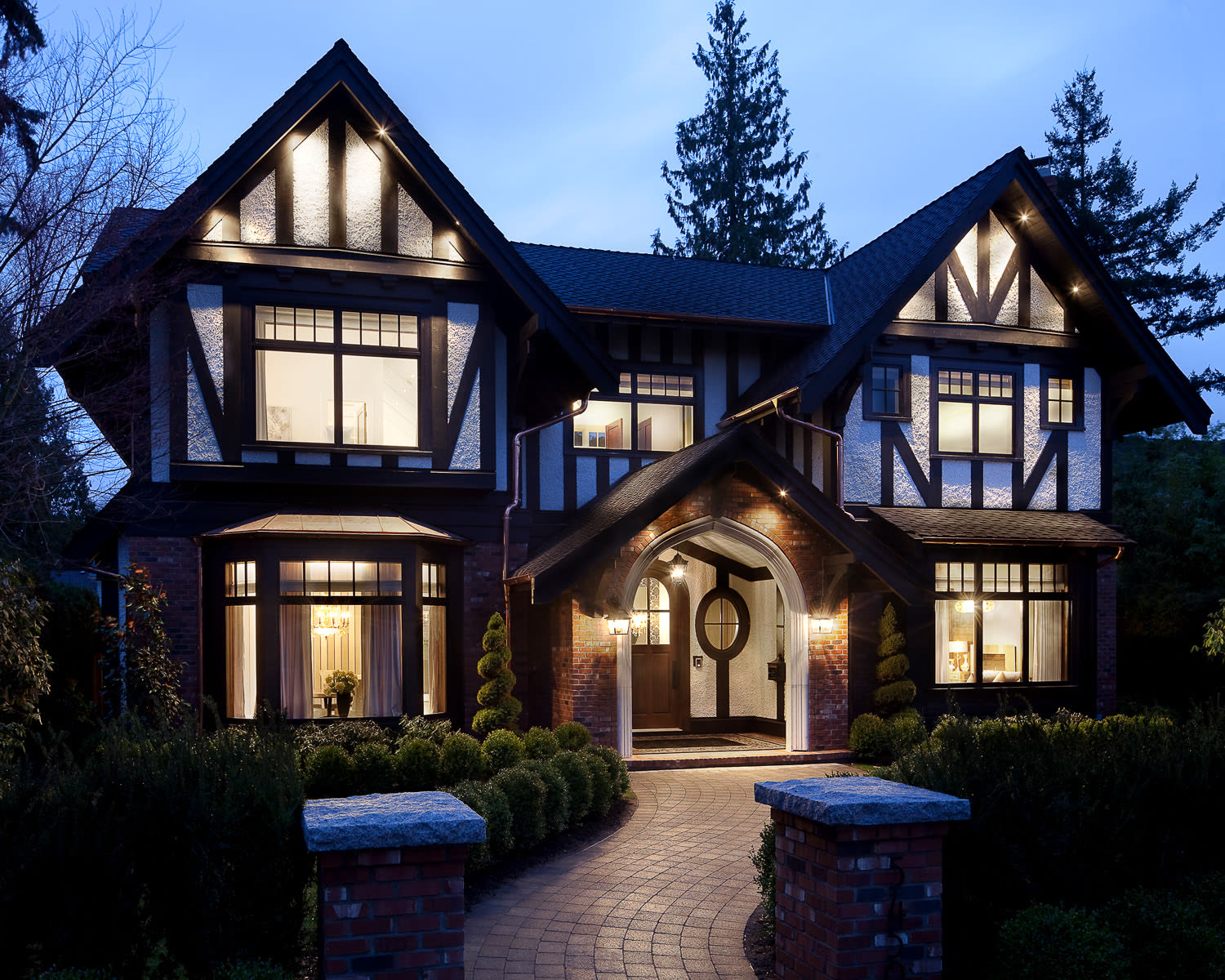
If you own an older house on Vancouver's west side, you have probably had this conversation at the kitchen table. Keep it, or start over? The answer depends on the structure, the street and what the City allows. Here is how the rules work, in plain terms, as of October 29, 2026. Each rule links to the City page it comes from.
Should I restore or rebuild my character home in Vancouver?
Restore if the house is sound, the street matters to you, and you want the extra floor area the City allows when a character house stays. Rebuild if the structure is failing or the design cannot meet your needs. Many families land in between: keep the face the street knows and rebuild behind it. A site visit settles it.
Our team brings the grandeur of a 1920s home into the 21st century, as our About page puts it, so we work through this question often. We start with the bones. Is the foundation sound? What shape are the envelope, the wiring and the plumbing? How does the floor plan fit the way your family lives now? Restoring an older house is not automatically the cheaper path, and we will not pretend it is. It is a choice about what you want to keep, and the City's rules reward that choice.
What counts as a character house in Vancouver?
The City describes a character house as one typically built before 1940 that meets set criteria. You can ask the City for a character merit assessment to find out if yours qualifies. The incentives apply in R1-1 zones, the low density zone that took effect on October 17, 2023 in areas previously zoned RS.
The City explains the program on its character house page and describes the R1-1 zone on its housing options page. Start there to look up your lot's zoning. Then bring us the address, and we will tell you what we think the house can become.
What does the City allow if I keep a character house?
In an R1-1 zone, keeping a character house lets you add floor area, convert the house into multiple units, or build an infill home in the rear yard. You can rent or strata-title the new units. The City lists character retention at up to 0.85 floor space ratio, against up to 0.6 for a new single detached house.
Floor space ratio compares total floor area to lot size. On a hypothetical 4,000 square foot lot, 0.6 allows 2,400 square feet and 0.85 allows 3,400. Those are district schedule ceilings, and the City measures floor area under its own rules, so we confirm the real number for your lot. The City also allows multiplexes of 3 to 6 strata units in R1-1 at up to 1.0 floor space ratio, depending on site size, so retention is one option among several. We lay the options side by side before you decide.
How much of the old house do I have to keep?
The City's guideline is to retain approximately 40 percent of the primary structure, meaning the exterior framing and sheathing, to qualify for the zoning incentives. In general, street-facing walls, the original roofline and distinctive exterior features are expected to stay. A registered architect or engineer documents what is kept.
The City's retention bulletin also recognizes that building code upgrades mean original structure, cladding and windows may not be kept at the highest level. That matches the work. We keep the face the street knows, and we rebuild what a modern family needs: a tight new envelope, current wiring and plumbing, heating and ventilation, and a kitchen that opens to the house.
What if I tear it down instead?
A house built before 1950 needs a demolition permit with green conditions. At least 75 percent of the materials must be reused or recycled, and 90 percent for a character house. A house built before 1910 must be deconstructed, with at least three tonnes of wood salvaged.
Those conditions come from the City's Green Demolition By-law. The City's 2026 fee schedule lists a $547 development permit fee for demolishing a house in R1-1 or First Shaughnessy. Tearing the house down also gives up the retention incentives, so you build under the standard R1-1 options instead, such as a single detached house or a multiplex. Read our timeline guide for how demolition fits into the schedule.
What is different in First Shaughnessy?
First Shaughnessy is a Heritage Conservation Area under an Official Development Plan adopted in 2015. A development permit is required for new development and for any demolition, construction or alteration. The First Shaughnessy Advisory Design Panel reviews applications. The plan aims to conserve mature trees and gardens and to limit further subdivision.
The Official Development Plan sets those goals. The City's development permit checklist says the panel is advisory to the Director of Planning and that applicants may be asked to present to it. Plan for that review in your schedule. We work in Shaughnessy often. Three of the homes in our gallery are Shaughnessy Renaissance, Shaughnessy Charm and Shaughnessy Jewel, so the process is familiar to us.
Is there money to help restore a character home?
Possibly. The City lists a heritage conservation grants program for privately owned single-family and two-family homes, small apartment buildings and similar buildings that are mostly wood-framed. The Vancouver Heritage Foundation manages it. Eligibility and funding change, so check the foundation's site before you plan on a grant.
The City summarizes its programs on its heritage grants page. Ask about grants before work starts, not after, and bring any award letter to your first meeting with us so we can build it into the schedule and the budget.
Frequently asked questions
What is a character house in Vancouver?
The City describes a character house as one typically built before 1940 that meets set criteria. You can ask the City for a character merit assessment to find out whether your house qualifies for the retention incentives.
Can I add an infill home if I keep my character house?
Yes, in an R1-1 zone. Keeping a character house lets you add floor area, convert the house to multiple units, or build an infill, which is a smaller detached home typically placed in the rear yard where the garage would normally go. You can rent or strata-title those units.
Who documents what I keep of a character house?
A registered architect or engineer. The City requires colour-coded retention drawings with the development permit application, and that professional must tell the City if a part meant to stay cannot be kept. Work stops until the permit is amended.
Is there grant money to restore a character home?
Possibly. The City lists a heritage conservation grants program for privately owned single-family and two-family homes and similar mostly wood-framed buildings. The Vancouver Heritage Foundation manages it, so check its site for current eligibility before you plan on it.
Does Tavan Group restore 1920s homes?
Yes. Our principal, Troy Van Vliet, and his team design and build clean-lined contemporary homes and bring the grandeur of 1920s homes into the 21st century. We start every restoration with a site visit and an honest look at the structure.
Standing in front of an older house and not sure which way to go? Book a complimentary consultation with Tavan Group and we will walk the property with you.
Questions people ask
What is a character house in Vancouver?
The City describes a character house as one typically built before 1940 that meets set criteria. You can ask the City for a character merit assessment to find out whether your house qualifies for the retention incentives.
Can I add an infill home if I keep my character house?
Yes, in an R1-1 zone. Keeping a character house lets you add floor area, convert the house to multiple units, or build an infill, which is a smaller detached home typically placed in the rear yard where the garage would normally go. You can rent or strata-title those units.
Who documents what I keep of a character house?
A registered architect or engineer. The City requires colour-coded retention drawings with the development permit application, and that professional must tell the City if a part meant to stay cannot be kept. Work stops until the permit is amended.
Is there grant money to restore a character home?
Possibly. The City lists a heritage conservation grants program for privately owned single-family and two-family homes and similar mostly wood-framed buildings. The Vancouver Heritage Foundation manages it, so check its site for current eligibility before you plan on it.
Does Tavan Group restore 1920s homes?
Yes. Our principal, Troy Van Vliet, and his team design and build clean-lined contemporary homes and bring the grandeur of 1920s homes into the 21st century. We start every restoration with a site visit and an honest look at the structure.
- City of Vancouver: Retain your character house
- City of Vancouver: Housing options in lower density areas
- City of Vancouver: Bulletin, Retention and Renovation of a Character House
- City of Vancouver: By-law No. 12239, amending the Green Demolition By-law
- City of Vancouver: 2026 Schedule of Fees for Development and Building Related Permits
- City of Vancouver: Heritage Conservation Area Official Development Plan
- City of Vancouver: First Shaughnessy District Development Permit Checklist
- City of Vancouver: Heritage grants
- Tavan Group: About us
- Tavan Group: Gallery
1920s homes brought into the 21st century, with the City's character and heritage rules handled.
How we do it →